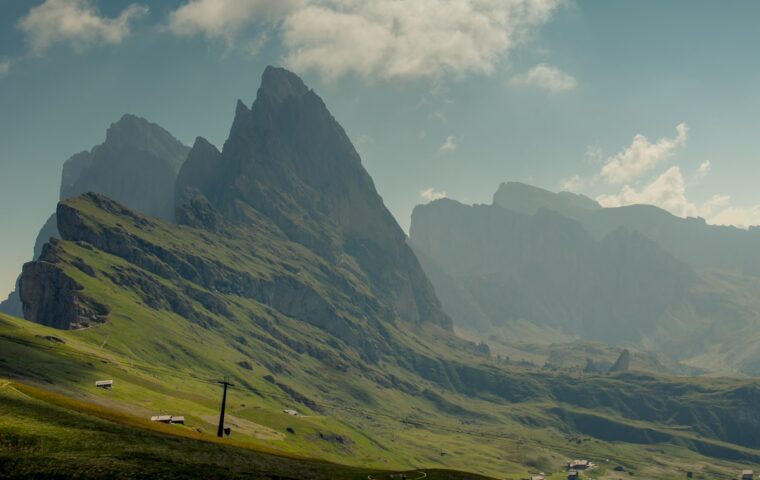

The first time I noticed it, I was standing on a cliff in a famous open world game, watching the sun set over a valley I had no real reason to walk into. The screenshot was gorgeous. Then I spent the next forty minutes climbing toward a glowing icon, killed three identical camps of enemies, and opened a chest with a slightly better sword in it.
That gap, between the photograph and the chore, is the thing reviews keep underselling. Not because critics are dishonest, but because a launch review is written under a clock, and a 60 to 80 hour map does not surrender its weak spots in week one. The map looks complete. The seams show up at hour thirty. So let me play this one all the way to the credits before I score it, and walk through the flaws that get smoothed over in the rush.
The Map Is Not the Game
Open world reviews love a number. "Over 200 hours of content." A square mileage. A count of points of interest. These are easy to verify in a few days and easy to put in a headline. What is hard to verify quickly is whether that space is worth crossing.
A big map is a delivery system, not a feature. Riding across a region in Red Dead Redemption 2, the space between objectives is the content. In a weaker title, that same space is a loading screen with better graphics.
Before you trust a map size, ask whether the game gives you a reason to stop walking. A great open world is full of small interruptions you choose. A hollow one is a commute with a checklist at the end.
The myth: more land means more game
The common belief is that a bigger world is a more generous one. It often means the opposite. Scale is expensive, so studios fill the extra space with copy-paste activities to justify it. Density beats acreage almost every time, and density is the one thing a launch review cannot measure.
Filler Disguised as Freedom
"Freedom" is the word that does the heavy lifting in open world marketing. You can go anywhere, do anything, in any order. It sounds like agency. A lot of the time it is just a long to-do list with no enforced sequence. Picture the classic icon-soup map: question marks, towers to climb, bandit camps, collectible feathers. Clearing them is satisfying in the way wiping a whiteboard is satisfying. The activity is real. The meaning is thin.
Compare that to a game that gives you fewer things but lets each one branch. Baldur's Gate 3 has a smaller footprint than many open worlds, yet a single questline forks in ways you will talk about for weeks. That is freedom with consequences attached, not freedom as a spreadsheet. The myth here is that optional content is automatically a bonus. Optional badly designed content is not a gift, it is a guilt trip glowing on your map, daring you to "complete" the game by doing things you stopped enjoying ten hours ago.
If the side activities reward you only with currency or crafting mats, and never with a story beat or a changed relationship, you are looking at filler. Padding pays you in numbers. Design pays you in moments.
Traversal: The Tax You Pay Every Session
Reviewers test traversal when everything is fresh and the horse handling feels novel. They rarely report on what it feels like the fortieth time you cross the same river to reach the same vendor. Movement is the verb you perform most in an open world, so small frictions compound. A mount that catches on geometry, a climbing system that drops you off a ledge, a fast travel network with too few nodes, these are paper cuts that add up into a reason you quietly stop launching the game.
Elden Ring gets credit for combat, and rightly so, but part of why people stayed is that Torrent made crossing the Lands Between feel like the adventure rather than a punishment between bosses. Good traversal hides the size of the map. Bad traversal advertises it.
In the first two hours, deliberately travel manually to a far objective instead of fast travelling. If the trip is boring already, it will be unbearable at hour thirty. Early traversal is the most honest preview a demo can give you.
The Story Spread Too Thin
A tight story has pacing. An open world deliberately hands you the pacing dial, and that is where narratives quietly snap.
Here is the realistic scenario. You are three missions into an urgent main quest where a city is supposedly burning. Then you spend nine hours fishing, decorating a house, and helping a stranger find their lost goat. When you return, the city is still burning, frozen in place, waiting politely for you. The tension evaporates.
This is not a player failing, it is a design tension the medium has never fully solved. The more freedom a world grants, the harder it is to keep a story urgent, because urgency depends on time pressure and open worlds sell you the fantasy of unlimited time. Compare that to a focused, linear horror experience like the remake versus the original Resident Evil, where every locked door and limited save exists precisely to keep the pressure on. Constraint, it turns out, is a storytelling tool open worlds often throw away.
Systems That Look Deep and Play Shallow
Crafting trees. Weather. Cooking. Faction reputation. The feature list on the back of the box reads like a simulation, but in practice many of these systems exist to be seen, not used. The classic example is a crafting menu with dozens of recipes where exactly two are worth making. The breadth is theatrical. You feel rich with options while actually using a tiny slice of them.
The myth is that more systems equal more depth. Depth is about how systems talk to each other, not how many checkboxes the game can show on a tooltip.
| Marketing promise | What it often means in practice |
|---|---|
| "Massive open world" | Long travel times, repeated activity templates |
| "Total freedom" | An unordered checklist with optional filler |
| "Living, reactive world" | NPCs on loops, main plot frozen while you roam |
| "Deep crafting and progression" | Wide menus, a handful of viable choices |
Performance and the Long-Session Reality
Launch reviews capture a snapshot. They rarely capture the slow degradation open worlds are prone to: texture pop-in that worsens as you fast travel, late-game areas that tank your frame rate, a save file that balloons until loading takes a small eternity. A title can run beautifully in the opening swamp and stutter badly in the dense city you reach at hour fifty.
There is also a human cost reviews skip. Open worlds invite marathon sessions, and a sprawling map encourages you to sit far longer than you planned. That is less about the code and more about your back and wrists, which is why a comfortable setup for long sessions matters more for this genre than almost any other.
Every flaw here shares one cause. Open worlds are graded fast on things that are easy to count, and the costly stuff (density, pacing, traversal feel, long-term performance) only reveals itself with time the reviewer did not have.
Knowing Who the Game Is Actually For
None of this means open worlds are bad. It means a score is a blunt instrument for a genre this varied. If you love the exploration loop, the slow drift toward a distant mountain, the side characters, then the "filler" is the point and you will adore it. If you play for tight stories and momentum, that same content is sandbagging your weekend. Neither of you is wrong.
That is the real work a review should do, and the same work I tried to do when I wrote about who Hades is actually for. A great recommendation is not "this is a 9." It is "here is who this is for, and here is who should walk away." Read the map size, sure. Then read who you are.
Are review scores for open world games just unreliable?
Not unreliable, just incomplete. A launch score fairly judges combat, visuals and the opening hours, but it struggles to judge density, pacing over the full length, and long-term performance, because those only surface after the review is filed. Treat the number as a first impression, not a verdict.
How can I spot a padded open world before buying?
Watch unedited late-game footage, not trailers. Check whether side activities reward story or just currency, and see if streamers are fast travelling everywhere by the midpoint. Heavy reliance on fast travel usually means the world itself is not fun to cross.
Is a bigger map always worse, then?
No, size is neutral. The best open worlds, like Elden Ring or Red Dead Redemption 2, earn their scale by making the space between objectives interesting. The problem is scale used as a marketing number rather than a design goal. Judge density and reasons to stop, not square miles.
So play the map before you trust the score. Cross it manually once, do a few side quests for the reward rather than the checkbox, and ask whether the space is talking back to you or just sitting there looking pretty. The best open worlds pass that test easily, and the hyped ones that do not are the reason your wishlist deserves a little patience.