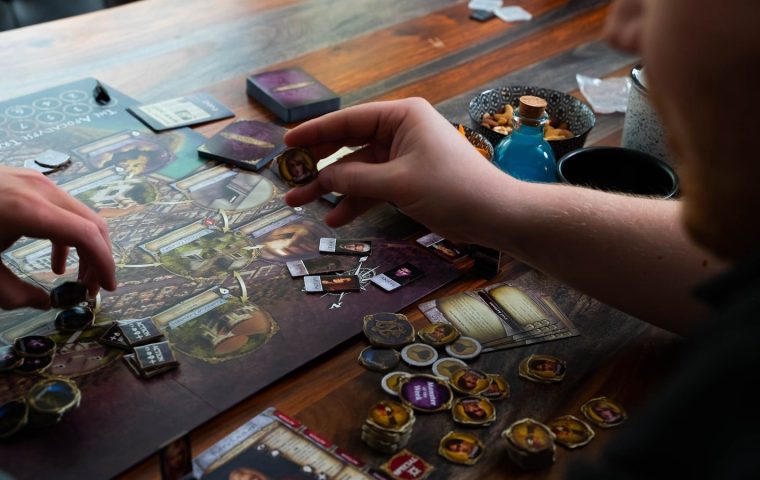


The first time I died in Hades, I had cleared maybe ten rooms, found a build I liked, and got flattened by a bone-throwing skeleton in the second region. I expected to feel robbed. Instead, Zagreus walked back through the House of Hades, his dad made a snide comment, and I noticed three new dialogue lines I had never heard before. The death was not a punishment. It was a page turn.
I have spent twenty years watching people bounce off roguelikes because nobody told them what the genre is actually selling. So let me be the guy who does. If you are eyeing Hades and wondering whether it will respect your time, here is an honest reality check, concept by concept.
What "roguelike" Even Means
Strip away the jargon and a roguelike is a game built around runs. You start with little, fight through procedurally arranged rooms, get stronger inside that single attempt, then lose most of it when you die and start over.
Hades is technically a "roguelite," which just means some progress sticks between runs. In a pure roguelike like the old NetHack, death usually means total reset. In Hades, every death feeds a meta-progression web: permanent stat boosts, new weapons, story beats. You are always inching forward even when you "lose."
A run is one attempt from start to death or victory. A "build" is the temporary combination of powers you assemble during that run. Both reset. What you learned, and what the game permanently unlocks, does not.
The common myth is that roguelikes are about memorizing one perfect path. They are the opposite. They are about getting good at improvising with whatever the game hands you that night.
The Loop: Why Repetition Is the Point, Not the Problem
If you grew up on linear story games, "do the same area again" sounds like a chore. But the loop in Hades is not repetition. It is variation under pressure. Every run you get different Boons from different gods, different weapon aspects, different room layouts.
One run you are a shotgun-blast lightning machine. The next you are a poison-stacking duelist who never wants to get hit. Same rooms, completely different problem to solve. This is the same reason competitive players grind ranked in something like Valorant. The map is fixed, but the puzzle is never the same twice.
Give it a real evening, not twenty minutes. The loop usually clicks around the third or fourth full run, once you stop fighting the controls and start making real build decisions. If by then you are thinking "I want to try a frost build next time" instead of "ugh, this again," you are in.
Procedural Generation: Controlled Chaos, Not Random Noise
People hear "randomly generated" and picture slot-machine nonsense where good runs are pure luck. That is the biggest misconception about the genre. Hades is hand-tuned chaos. The pool of rooms, rewards, and enemies is fixed and carefully balanced. What shuffles is the order and the offers, and you constantly choose between two doors with visible rewards. So a run is not luck happening to you. It is a series of small bets: the healing room or the damage upgrade, commit to this god's Boons or stay flexible for a better one later.
Early on, prioritize one or two gods instead of grabbing every Boon you see. A focused build beats a scattered one almost every time, and spreading thin is the most common mistake I see new players make.
If you have ever felt overwhelmed by a giant open map full of icons, the door-by-door structure here is a relief. It is the same lesson from my guide to cutting the busywork out of open-world games: fewer, meaningful choices beat a hundred shallow ones.
The Story Trick That Sets Hades Apart
Most roguelikes treat narrative as wallpaper. Hades made story part of the mechanics, and that is why it converted so many skeptics. Because you return to the House of Hades after every death, characters react to your last run. Relationships build, plot advances, and dying literally moves the story forward, which is a genuinely clever bit of design.
Compare that to a game like Cyberpunk 2077, where the story is a fixed line you walk once. I wrote about how that landed in my revisited first impressions of Cyberpunk, and the contrast is instructive. One wants you to finish a journey. Hades wants you to live in a cycle and find new corners of it each pass. The myth that roguelikes are "all gameplay, no heart" finds its loudest counterargument here.
The Money and Time Question
Now the part I always come back to. Hades usually sits at a reasonable price, often around $25, and it goes on sale regularly. There are no microtransactions, no battle pass, no nagging storefront. You buy the game, you own the whole game.
On time it is generous in both directions. A single run lasts roughly 20-40 minutes, so it fits a lunch break, yet there is a 50-plus-hour tail if you chase the full story and harder settings.
| What you want | Does Hades deliver? |
|---|---|
| Short, self-contained sessions | Yes, runs are bite-sized |
| A finite story with an ending | Yes, but it takes many runs to reach |
| No predatory monetization | Yes, one purchase, nothing else |
| A relaxing game with zero pressure | Not really, combat is demanding |
| Mastery to chase long-term | Yes, deep difficulty scaling |
This is a fair deal by modern standards. It plays beautifully on a Steam Deck, runs on basically any modern PC, and never asks for your wallet again after checkout.
Who Should Skip It
I am not here to tell you everyone will love this, so here are a few honest red flags. If you want a calm, low-stakes experience, the combat is fast and can be genuinely tense. This is not a cozy farming sim like Stardew Valley. If repetition fundamentally bores you, even smart repetition, the structure may grate. And if you only enjoy games where a single playthrough tells a complete linear story, the loop will feel like an obstacle rather than the appeal.
If you tried Hades for one run, died, and quit annoyed, you did not really test it. But if you played five runs and still felt no pull to start a sixth, trust that. Forcing the genre rarely works.
There is also a remaster-versus-original lesson lurking here, the same tension I unpacked in my piece on the Resident Evil remake compared to the original. A familiar idea, polished and reframed, can win over people who swore the older version was not for them. Hades did exactly that for the roguelike genre at large.
So, Who Is Hades Actually For?
It is for the player who likes getting better at something, who enjoys building a plan on the fly and watching it pay off, who actively likes that the path resets so the puzzle stays fresh. It is also for anyone who assumed roguelikes were cold and storyless and is willing to be proven wrong.
Hades rewards players who want mastery over a memorized path, short sessions over marathon commitments, and a story that grows through repetition. If "die, learn, try again, get a little stronger" sounds satisfying rather than punishing, this is your on-ramp to the genre.
Do I need to be good at action games to enjoy Hades?
No. The combat is skill-based, but the permanent upgrades you earn between runs steadily lower the difficulty curve. There is also a "God Mode" assist setting that boosts your damage resistance after each death, so the game meets you where you are.
How many hours until I "beat" Hades?
Reaching the credits typically takes 20-40 hours, spread across many runs. The full story and the hardest difficulty settings can push that well past 50 hours if you want everything.
Is Hades a good first roguelike for a total newcomer?
It is probably the best entry point in the genre. The meta-progression, the readable build choices, and the story hooks all soften the harsh edges that scare people away from older roguelikes. If you try one, start here.
My advice is simple. Buy it on a sale, commit to one full evening rather than one quick run, and watch whether you start planning your next attempt before the current one is even over. If you catch yourself doing that, you are home. If not, you saved twenty-five bucks finding out.