

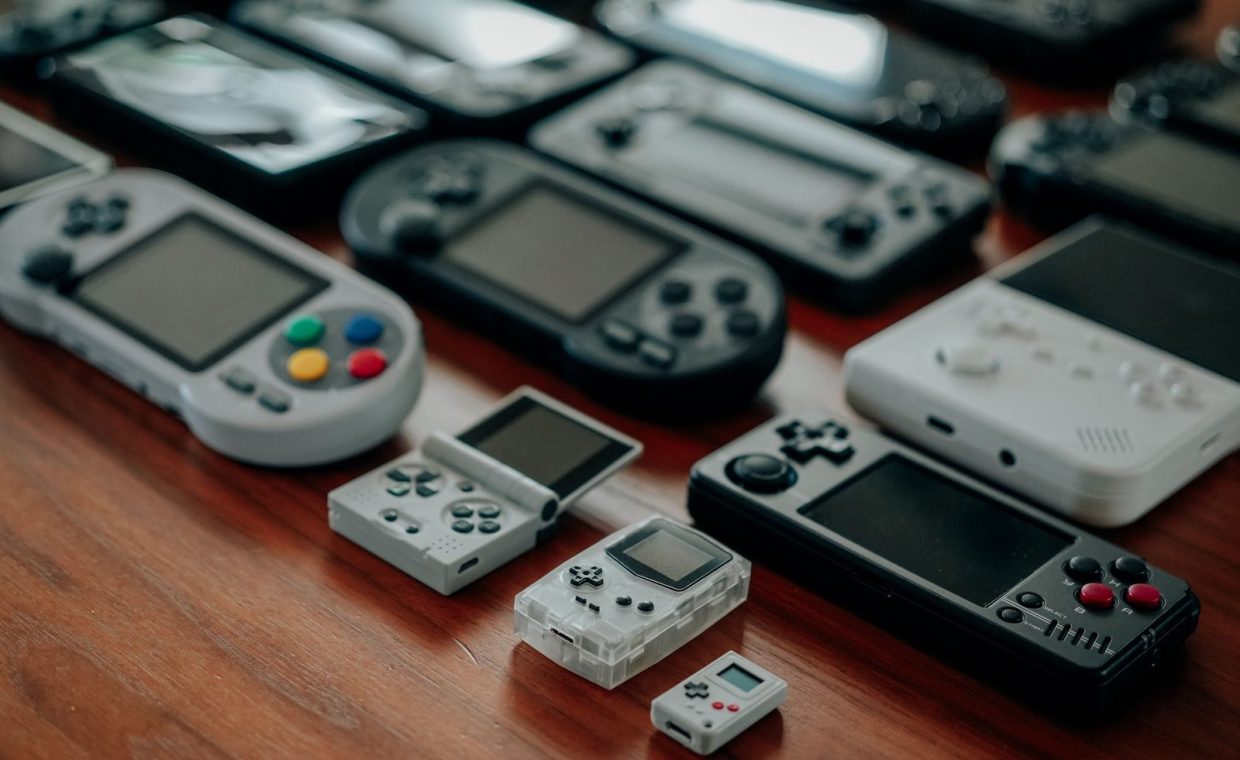
A few years ago I plugged a Game Boy cartridge I had owned since childhood into a working handheld, and the save file was gone. Not corrupted, not glitched. Gone. The tiny battery soldered onto the board inside the cartridge had finally died, and with it went a save state I had carried around for most of my life.
That little moment is the whole story of game preservation in miniature. The games we treat as permanent are sitting on aging plastic, spinning discs, and servers somebody is paying to keep online. None of that lasts forever, and a lot of it is already gone.
So let me walk through what preservation actually means, piece by piece. I want to define each idea, show you a concrete case, and clear up the assumption people usually bring to it. Because the romantic version (just copy the file and you are done) is not how any of this works.
What "preservation" really means
Preservation is not just owning a copy of a game. It is keeping a game playable, in something close to its original form, long after the company that made it has stopped caring.
That last part matters. A box on a shelf is a museum piece. Preservation is about the experience staying alive: the controls, the timing, the music, the feel of the thing running the way it was meant to run.
Think about a game like Stardew Valley. It is everywhere right now, on every platform, easy to buy. But "available today" and "preserved" are different promises. Availability depends on a storefront deciding to keep selling it. Preservation is what you fall back on when that storefront is gone.
Preservation asks a harder question than ownership: not "do I have it?" but "can someone still play it correctly in twenty years?" Those are not the same thing, and assuming they are is how classics quietly disappear.
The myth: "It is just a file, it will always exist"
People assume digital things are immortal. They are not. Files rot, formats die, and the hardware that reads them ages out. A perfect copy of a game is useless if nothing on Earth can run it anymore.
Why old hardware fights back
The first wall you hit is physical. Cartridges, discs, and consoles were built to sell, not to survive decades. They were never designed with the long game in mind.
Those save batteries I mentioned die on a schedule. Optical discs suffer from disc rot, where the reflective layer degrades and the data slowly becomes unreadable. Even the laser in an old disc drive wears out and stops focusing properly.
Consider the original Xbox or early PlayStation hardware. The drives in those machines are now a known failure point, and replacement parts are getting rare. You can have a flawless disc and still be stuck because nothing can read it.
Working original hardware is a depreciating asset. Every console that dies and is not repaired shrinks the pool of machines that can run a given game the "authentic" way. Collectors feel this most, and prices show it.
The myth: "Real fans should only play on original hardware"
I understand the romance of it. There is something honest about a CRT and a real controller. But treating original hardware as the only legitimate way to play is a slow death sentence for the games themselves, because that hardware is finite and failing.
Emulation: copying the machine, not just the game
This is where emulation comes in, and it is the single most important tool preservation has. An emulator is software that pretends to be old hardware, so your modern PC or Steam Deck can run a game the original console once ran.
The clever part is that you are not just preserving the game. You are preserving a working model of the machine it needed. That is what keeps the experience alive even after every physical console has died.
A Steam Deck running a classic console library through an emulator is, honestly, one of the better preservation stories of the modern era. People who would never own a shelf of vintage consoles can still touch decades of gaming history on a single handheld.
If you want to understand emulation accuracy, try the same old game on two emulators. You will notice tiny differences in audio timing, color, or input lag. Chasing those last few percent of accuracy is most of the actual work, and it is brutally hard.
The myth: "Emulation is always inaccurate and cheap"
The lazy take is that emulation never feels right. Modern accuracy-focused emulators are extraordinary, recreating quirks of the original chips down to behavior most players never consciously noticed. The trade is performance: perfect accuracy can demand far more power than the original console ever used.
The hardest case: online and live-service games
Here is where preservation gets genuinely scary. A single-player game is, in principle, savable. A game that only exists while a company keeps its servers running is a different beast entirely.
When the servers go dark, the game can simply cease to exist. Not damaged, not aged. Switched off. You can own the disc, the account, everything, and still have nothing to play.
Think about how much of modern play is server-bound. A competitive shooter built around matchmaking, ranked ladders, and live updates leaves almost nothing behind when it shuts down. The community memory survives, but the game does not. If you have spent time trying to sharpen your positioning in competitive shooters, imagine all of that skill attached to a title that no longer boots at all.
This is why the long history of gaming communities matters so much. Fans archive patch notes, record matches, and reverse-engineer servers precisely because the official version was never built to outlive its profit window.
For online games, the most common preservation method is fan-run private servers built by reverse-engineering the original. It is impressive work, it is legally murky, and it is often the only thing standing between a beloved game and total erasure.
The myth: "If I bought it, it is mine forever"
Most digital purchases are licenses, not ownership in the way a cartridge was. The company can revoke access, pull the game from sale, or shut the servers, and you are usually left without recourse. That gap between what we feel we bought and what we actually bought is the heart of the live-service preservation problem.
Who actually does this work
Preservation is not one big organized effort. It is a messy mix of institutions, hobbyists, and the occasional sympathetic studio, all pulling in roughly the same direction.
Some of it is formal: libraries and archives that treat games as cultural artifacts worth keeping. Most of it is volunteer labor, people dumping cartridges, documenting hardware, and maintaining emulators in their spare time for no money.
Occasionally a studio leans in. A team that re-releases its back catalog, or quietly blesses a community port, is doing real preservation even if they would never call it that. It also tends to pay off in goodwill, the same way a thoughtful studio that recovered from a rough launch rebuilt trust by listening to the people who stuck around.
| Method | Best for | Main weakness |
|---|---|---|
| Original hardware | Authentic feel | Hardware ages and fails |
| Emulation | Long-term access | Accuracy and legal gray areas |
| Official re-releases | Easy, legal access | Depends on a company caring |
| Fan servers and ports | Online and dead games | Legally risky, can be shut down |
What you can do without becoming an archivist
You do not need a lab to help. A lot of preservation is just ordinary players refusing to let things vanish quietly.
Buy and play the official re-releases when good ones exist, because sales tell studios that old games still have an audience. Back up your own save files. Support the modest, legal ports and collections that publishers actually put effort into.
And keep talking about old games. Reviews, retrospectives, and recorded playthroughs are a form of preservation too. They keep a title's reputation alive so that when someone asks "was this worth saving?" there is an answer waiting.
Preservation fails game by game, for boring reasons: dead batteries, rotting discs, unread formats, and switched-off servers. It survives because emulators model old hardware, communities archive what companies abandon, and players keep demanding access. None of it is automatic.
Is emulation legal?
The emulator software itself is generally legal, since it is just a program that mimics hardware. The legally fraught part is the games, since downloading ROMs of titles you do not own is copyright infringement in most places. Dumping a copy of a game you physically own sits in a grayer area that varies by region.
Why cannot companies just keep everything for sale forever?
Licensing is the usual answer. Old games often contain music, engines, or third-party code with expired contracts, so re-releasing them means renegotiating rights that may no longer be worth the cost. Add aging code that breaks on modern systems, and "just keep selling it" turns into a real project nobody is funding.
Are online-only games basically doomed?
Many are, at least in their original form. Once official servers shut down, only fan-run private servers or rare official offline patches can save them, and neither is guaranteed. The safest live-service games to revisit later are the ones that ship with some kind of offline or single-player mode.
I still think about that wiped save file more than I should. It taught me that the games I love are not as safe as they feel, and that "playable forever" is something people choose to make true, not a guarantee. If a classic still boots for you today, somebody, somewhere, probably did quiet work to keep it that way. The least we can do is keep playing, keep talking, and keep asking which games are worth saving next.