

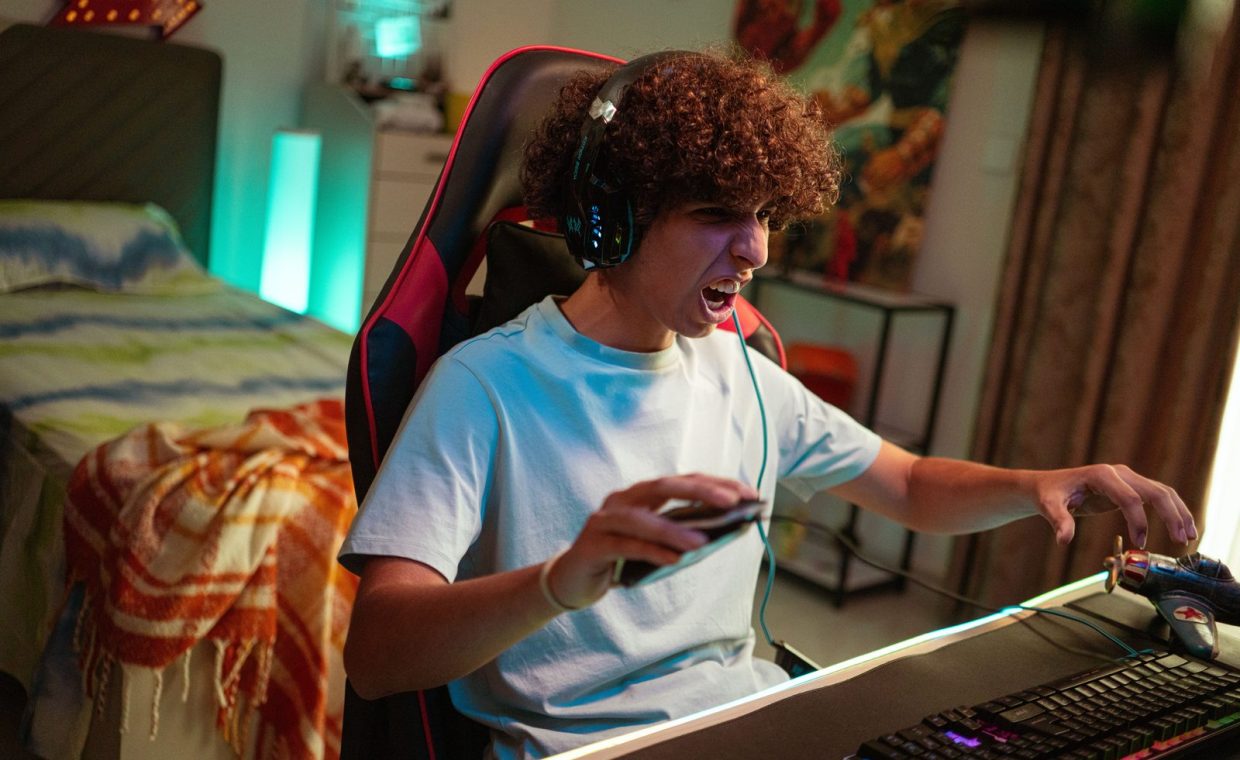
The first time I watched someone finish Super Mario Bros. in under five minutes, I was standing in a friend's basement at 2 a.m., holding a warm soda and saying "no way" out loud to nobody. The runner on screen wasn't a pro athlete or a sponsored star. He was a college kid named Devon, hunched over a worn controller, narrating his own inputs like a pilot reading a checklist.
What struck me wasn't the speed. It was the precision. Every jump was a decision he had made thousands of times before, refined down to the frame. He wasn't playing the game the way it was sold to him. He was playing it the way he had reverse-engineered it.
That basement moment is, in miniature, the whole story of speedrunning. A thing that looked like a party trick turned out to be a craft, and that craft turned into one of the most organized, generous, and globally connected communities in all of gaming. Here is how it happened, told through Devon and the thousands of runners who followed paths just like his.
Where The Stopwatch Mentality Came From
Long before livestreams, players were already racing themselves. Arcade high-score boards were the original leaderboard, and the kids who memorized Pac-Man patterns were doing exactly what speedrunners do now, just without a timer running in the corner.
The shift to time, rather than score, came with games that had clear endings. Once a game had a finish line, the obvious question became "how fast can I reach it?" Doom communities in the mid-90s started trading recorded demos, and id Software shipping the tools to record those demos was, honestly, a quiet act of genius.
Devon told me he got hooked the same way most runners do. He beat a game he loved, felt that small post-credits emptiness, and then wondered if he could do it again, but better. That itch, the one that says "I bet there's a faster way," is the entire engine of this hobby.
From Bedroom Timer To Public Leaderboard
For his first serious run, Devon picked a game he already knew cold. He told me he put in something like 200 attempts before he had a single finish he wasn't embarrassed by. His early times were nowhere near the record, and that gap was the point. The record gave him a map of how much faster the game could go.
This is where centralized leaderboards changed everything. When community-run sites started collecting verified times in one place, a scattered hobby suddenly had a shared scoreboard. Runs were submitted with video proof, moderators checked them, and a number next to your name meant something real.
A speedrun record is only as trustworthy as its evidence. The community built a culture of full-run video, input displays, and load-time removal long before any company asked them to. That self-policing is a big reason outsiders started taking the scene seriously.
Devon submitted his first verified time and watched himself appear at rank 340-something out of a few hundred runners. He still calls it one of the proudest moments of his life, and I get it. He wasn't last because he was bad. He was on the board because he was real.
The Two Kinds Of Speedrun, And Why It Matters
People outside the scene assume every run is about exploiting glitches, and that misunderstanding causes a lot of bad takes. There are really two broad philosophies, and most runners respect both.
- Any percent means reaching the credits by any means necessary. Skips, glitches, sequence breaks, and clipping through walls are all fair game.
- 100 percent and glitchless categories ask you to play the "intended" game flawlessly and fast, no shortcuts allowed.
Devon prefers glitchless, which he describes as "execution as a sport." There is no trick saving you. You just have to be cleaner than everyone else, input after input, for an hour straight. Other runners chase the wild stuff, hunting for the one frame-perfect glitch that rewrites a category overnight.
The constant arms race
A discovered glitch can erase years of progress in a weekend. A route that took the community a decade to optimize can be obsoleted by one teenager poking at memory addresses. That volatility is exhausting and thrilling in equal measure, and it keeps the same games alive for fifteen or twenty years.
How A Hobby Built Its Own Economy Of Knowledge
The thing that turned speedrunning from a pastime into a movement was not money. It was sharing. Top runners routinely publish their entire strategy, frame data, and route notes for free, knowing full well it will be used to beat their own record.
Imagine a chef giving away the recipe that wins them the competition, then cheering when someone cooks it better. That is the default posture here, and it is genuinely rare in competitive spaces.
If you want to try a run, pick a short game you already love and aim to beat the slowest verified time on the board first, not the world record. A realistic early goal of finishing in the bottom half of a leaderboard keeps you motivated instead of crushed.
This knowledge-sharing also reshaped how players see older titles. A great speedrun is one reason a publisher might notice ongoing demand and decide a re-release is worth it, which ties into the broader story of why aging classics get remastered and brought back to modern hardware. Active running communities keep a game's heartbeat going.
The Charity Marathons That Made It A Movement
The single biggest leap from niche to mainstream came from charity. Marathon events, where runners play live for days straight while viewers donate, took the private craft and put it on a stage with a real purpose.
Devon got an audition couch slot at a smaller regional marathon after years of grinding. He told me his hands were shaking so badly during the first ten minutes that he nearly dropped a basic trick he had nailed thousands of times in practice. Then the donations started ticking up because of his run, and something clicked.
I wasn't playing for a record anymore. A stranger watching at 4 a.m. just gave money to a children's hospital because I jumped over a pit correctly. That reframed the whole thing for me.
These events now raise enormous sums, and they did it by being relentlessly welcoming. Commentators explain tricks for newcomers, runners hype each other up, and the whole vibe is closer to a public radio fundraiser than a tense esports final. That tone is the secret. It made the hobby legible to people who had never held a controller.
What Speedrunning Shares With Traditional Esports
I cover competitive play for a living, and I get asked whether speedrunning "counts" as esports. My answer is that it is a cousin, not a clone, and the differences are the interesting part.
| Aspect | Traditional esports | Speedrunning |
|---|---|---|
| Opponent | Another player or team in real time | The clock and the leaderboard |
| Knowledge | Often guarded as competitive advantage | Shared openly with rivals |
| Format | Live head-to-head matches | Solo runs, async submissions, live marathons |
| Game age | Newest competitive titles | Anything, including decades-old classics |
There is real overlap in mindset, though. The muscle memory a glitchless runner builds is the same deliberate practice a Valorant player uses to drill recoil. And the way marathon couches coordinate, hyping the runner and feeding the chat, has a lot in common with how you build chemistry and roles in a coordinated five-stack. Both are about a group amplifying one shared goal.
One honest difference: speedrunners are patient in a way live esports rarely allows. A record attempt can take hundreds of resets, which feels a bit like the agonizing wait fans go through when a hotly anticipated game gets delayed for more polish. Both demand you respect the long game over the quick payoff.
Devon Today, And The Road That Got Him There
Devon never became a household name. His best public rank in his main category hovers somewhere in the top fifty, not the top one. By any pro-esports metric, he is a hobbyist.
But he has run on a charity couch three times, helped route a category that newcomers now use as their starting guide, and mentored a handful of runners who have since passed his own times. He spends maybe 10-15 hours a week on it, less than he used to, and he says it gives back more than almost anything else he does.
The fastest way to kill your love of a game is to grind a single run until it feels like a job. Plenty of promising runners burn out chasing a time that was always going to take months. Take breaks, run multiple games, and remember the basement-at-2-a.m. feeling that got you here.
Speedrunning grew from arcade score-chasing into a verified, leaderboard-driven craft. It became a movement through radical knowledge-sharing and welcoming charity marathons, not through prize money. You do not need to be world-class to belong, and the community's generosity, not its records, is what made it last.
Do I need special hardware to start speedrunning?
No. Most people start on whatever they already own, whether that is a console, a basic PC, or even a Steam Deck. A simple timer app and a way to record video are usually enough to make your first verified attempt.
Is using glitches considered cheating?
Not within the rules of a glitch-allowed category. Cheating means faking a run or breaking a category's stated rules. Exploiting the game's own quirks in an "any percent" run is a legitimate, respected skill.
How long until I can post a competitive time?
It varies wildly by game, but expect weeks of casual practice for a short title before you are happy with a submission. Aiming to beat the slowest board time first keeps the goal realistic and the hobby fun.
If any of this stirred up an old itch, my honest advice is to pick the game you already love most and just run it badly once. Hit the timer, mess up, laugh, and submit it anyway. That is exactly where Devon started, and where every runner on every leaderboard started too. The board has room for you.