
A friend of mine started Baldur's Gate 3 last spring. Three weeks later he texted me, half proud and half annoyed, that he was 28 hours in and still hadn't left the opening area near the crashed ship. He had explored everything twice, read every item description, and somehow ended up under-leveled for the fights that mattered.
That is not a him problem. That is the RPG learning curve doing exactly what it does to almost everyone. The genre rewards curiosity, then quietly punishes you for the wrong kind of it.
I spent years as an amateur competitor before I started writing, and I will tell you the same thing I told him. Most early RPG pain comes from a small handful of fixable habits, not from a lack of skill. Here are the ones I see most often, and what to do instead.
Hoarding every consumable until the credits roll
You know the elixir. The one shiny healing item or grenade you have been saving since hour two because what if you need it later. New players end a 60-hour campaign with a backpack full of "later" that never arrived.
This costs you in two ways. You take avoidable deaths in fights you could have won, and you never learn how your tools actually feel in combat. A buff potion you never drink may as well not exist.
Set a personal rule: if a fight is genuinely scary, you are allowed to spend. Most RPGs hand out consumables faster than you can use them, and vendors restock. Treat the items as a budget to spend, not a trophy case to admire.
The exception is a small number of unique, non-craftable items. Those are worth holding. Everything stackable and buyable is meant to be burned.
Treating every side quest as mandatory
This is the one that trapped my friend. Open-world and CRPG design dangles a hundred markers on your map, and the instinct is to clear them all before moving the story forward. It feels responsible. It is actually a slow leak.
The cost is burnout. You spend your freshest hours fetching ten bear pelts instead of hitting the story beats that made you buy the game. By the time you reach the good stuff, you are tired of the game.
How to triage quests
Read the first line of a quest and ask one question: does this give me a reward, a story, or a system I care about right now? If it is none of those, skip it or shelve it. You can always come back.
I leaned hard on this approach in my piece on cutting the busywork out of giant open worlds, and it applies double to RPGs. Completionism is a choice for a second playthrough, not a tax on your first.
Ignoring the difficulty and accessibility settings
There is a strange pride that stops new players from touching the options menu. They pick the default difficulty, struggle, and assume the genre is just like that. Meanwhile the game shipped with a dozen toggles built to help them.
Why it costs you: a mismatched difficulty turns a story you love into a chore you resent. People bounce off Elden Ring not because it is unbeatable, but because they never adjusted how they played around it.
Lowering combat difficulty, enabling aim assist, turning on subtitles, or slowing time in menus does not invalidate your save. The designers put those switches there on purpose. The only wrong setting is the one that makes you quit.
Spend five minutes in the options on day one. Find the combat difficulty, the text size, and any "story mode" toggle. You can change them again later. Nothing is locked.
Spreading your skill points too thin
New players love the fantasy of the do-everything hero. So they put one point in stealth, one in fire magic, one in heavy armor, one in persuasion, and end up mediocre at all of it. In RPGs, breadth without depth is a trap.
The cost shows up around the midgame. Enemies scale, encounters demand a real answer, and your scattered build has no answer to give. You feel weak even though you "leveled up."
If you cannot describe your character in one sentence ("I am a stealth archer," "I am a fire mage who controls the battlefield"), your build is probably too diffuse. Pick an identity and feed it first.
The fix is commitment. Choose one primary path and pour points into it until it actually works, then branch. A focused build at level 20 beats a sampler platter at level 20 in almost every system I have played.
Skipping the tutorial systems and the journal
I get it. The tutorial popups feel like they are slowing down the fun. So people mash through them, then spend the next ten hours confused about crafting, or factions, or why their weapon keeps breaking.
The cost is invisible at first and brutal later. A mechanic you ignored in hour one (weapon durability, weakness types, a stamina system) becomes the exact thing wrecking you in hour fifteen.
You do not need to memorize anything. Just know where the in-game help lives. Most modern RPGs keep a glossary or a "how to play" section in the pause menu. When something kills you twice and you do not know why, that menu is your first stop, not a wiki tab.
| Habit | What it costs | The fix |
|---|---|---|
| Hoarding consumables | Avoidable deaths, unused tools | Spend in scary fights; save only uniques |
| Clearing every side quest | Burnout before the good story | Triage by reward, story, or system |
| Default difficulty only | Resentment, quitting | Tune settings on day one |
| Thin skill spread | A weak midgame build | Commit to one identity first |
| Skipping help menus | Confusion that compounds | Learn where the glossary lives |
Burning out by binging in marathon sessions
RPGs are long. A modest one runs 30-40 hours, and the big ones run far past that. New players often try to swallow them in giant weekend marathons, then never touch the save again because it feels like homework.
The cost is the saddest one on this list: an unfinished game you actually liked. You did not lose interest. You exhausted yourself.
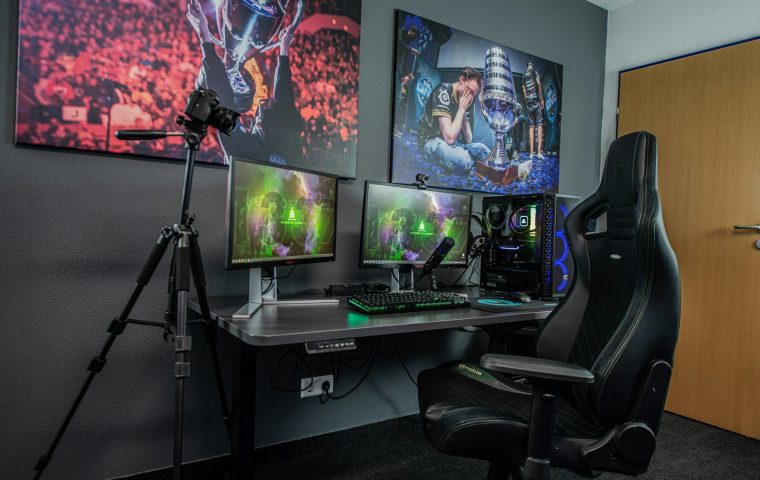
Pacing matters more than raw hours, and so does your body. A slouched chair and a too-bright screen turn a fun session into a sore one, which is why I am a broken record about a setup that holds up across long sessions. Aim for shorter, regular sittings over rare epic ones. Two focused hours beats a bleary six-hour slog.
Believing you have to start with a 100-hour epic
Plenty of newcomers think the genre means committing to a sprawling RPG right away, and the size scares them off before they ever start. The cost is simple: you never build the habits because the on-ramp felt too steep.
You do not have to begin with the biggest thing on the shelf. Some of the friendliest entry points into RPG systems are small and cheap. Stardew Valley teaches you about progression and resource loops without a single boss fight, and there are dozens more in the same range.
If a 60-dollar epic feels like too much of a leap, browse some smaller RPG-flavored gems under twenty dollars first. Learn the grammar of the genre on something low-stakes, then graduate to the giants when the systems feel like second nature.
Spend your consumables, skip the filler quests, tune your settings, commit to one build, read the help menu, pace yourself, and start small. None of these are skill issues. They are habits, and habits are easy to swap.
Should I follow a build guide for my first RPG?
Not for your whole playthrough. Skim one early so you understand what a focused build looks like, then make your own choices. Your first run is for learning the systems and having fun, not optimizing a spreadsheet. Save the min-maxing for run two.
Is it bad to lower the difficulty partway through?
Not at all. Nearly every modern RPG lets you adjust difficulty on the fly, and the story does not care how hard the combat was. If a wall is making you want to stop playing, turning the dial down is the move that keeps you in the game.
How do I know if I am over-exploring instead of progressing?
A good signal is when you cannot remember the main quest objective. If you have wandered so far that the central story feels distant, point yourself back at the next story beat. The world will still be there when you return, and it usually opens up more once the plot advances.
Every RPG player you admire made all of these mistakes first. I certainly did, several times, before any of it clicked. Give yourself permission to play a little messier and a lot more deliberately, and the genre stops feeling like a second job and starts feeling like the reason you got into games in the first place. See you in the next one.