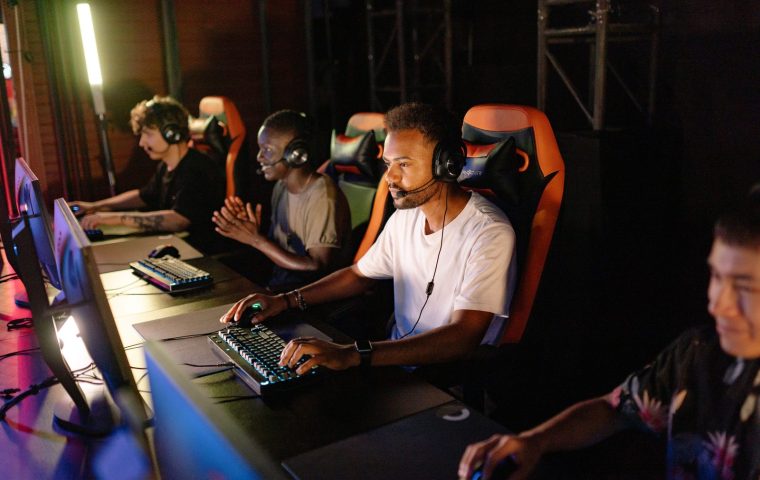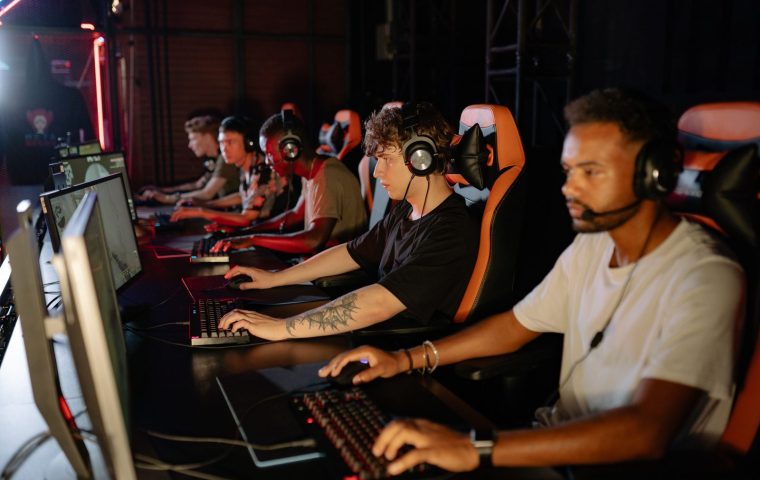


The first time my old five stack actually clicked, it happened almost by accident. We were down 3-9 in a scrim and everyone was tilted when our IGL cut through the noise and said, "stop calling, only give enemy locations for two rounds." No strats, no theories, just locations, and somehow we won the half off that one instruction.
That moment taught me something I keep circling back to. Five good players is not a team, it is five people who happen to share a lobby while each runs a private movie inside their own head. The distance between those two situations is exactly where most groups quietly fall apart.
If your squad wants to climb together and maybe scrim or compete in amateur brackets, here is the order I would build everything in. These steps translate whether you are a CS or Valorant five, an Overwatch six scaled down, or a Rocket League trio scaling its habits up.
Agree on why you are queuing before you queue
Most five stacks die because nobody ever said out loud what the group is actually for. One person wants to grind to Immortal while another just wants to mess around after work, and although both goals are perfectly fine, they do not belong in the same ranked session.
Have the awkward conversation early. Are you a competitive unit, or a hangout that happens to play ranked? Write the answer in your Discord channel topic if you have to, because clarity beats assumptions every time. I am not joking.
Pick one mode as your "serious" mode and one as your "for fun" mode. When everyone loads into the serious one, they understand that the comms standard changes with it. This single boundary prevents most of the tilt arguments before they ever start.
Build a comms standard nobody has to guess at
Bad comms is not people staying silent, it is people talking constantly about the wrong things. Five players narrating their own deaths produces noise, never information.
Set a simple rule for what genuinely counts as a callout: enemy location, enemy count, your own status, and your intention, in that priority order. "Two mid, one lurking, I am low, falling back to site" is worth ten frustrated "oh my god how did he hit that" lines.
Then add the part people consistently skip, which is to go quiet during the execute. Once the play begins, only the person making the call talks while everyone else confirms or stays off comms entirely. You can debrief after the round, but never during it.
Before you press your push-to-talk, ask whether your sentence helps a teammate make a decision in the next two seconds. If it does not, save it for the buy phase or the post-round chat.
Give everyone a role they actually own
A unit needs more than five fraggers. Someone has to make the mid-round call, someone watches the economy or the cooldowns, and someone is the designated entry who is allowed to die first without anyone whining about it.
Assign these deliberately, not by accident. The quiet player who reads the game well might become your strongest in-game leader even with the worst aim on the roster, because aim is trainable while game sense and the willingness to commit to a call under pressure are considerably rarer.
A starting role split for a five stack
| Role | Owns | Common mistake |
|---|---|---|
| IGL (caller) | Mid-round decisions, default setups | Trying to also frag hard and dropping calls |
| Entry | Taking first contact, baiting info | Getting blamed for trades that were not their fault |
| Support | Utility, trades, follow-up | Playing too passive and never trading the entry |
| Anchor | Holding a site or zone solo | Over-rotating off their post on early sounds |
| Flex | Filling gaps, second caller | Trying to do all four other jobs at once |
Roles are not cages, they are starting positions. The whole point is that on any given round, nobody is left asking "wait, whose job was that?"
Learn the map together, not separately
Five people who each understand the map differently will collide constantly. One thinks you are defaulting slow while another is already sprinting toward a fast hit, and you can have the cleanest aim in your rank yet still lose because your timings never line up.
Spend a session walking one or two maps together inside a custom game. Agree on names for spots, agree on default positions, and agree on what a "fast A" actually looks like measured in seconds. If you want the deeper theory behind why holding certain zones wins rounds, our breakdown of how map control shapes esports matches is a useful companion to this step.
New five stacks love to write fifteen set plays and then forget all of them under pressure. Start with two solid defaults per map and one clear rotation rule, then add plays only after the basics feel automatic.
Run a five-minute review after every session
This is the step almost everyone skips, and it is the one that separates a group that improves from a group that merely logs hours. You do not need to VOD review for two hours, you need five honest minutes.
Ask three questions. What did we do well that we want to keep, what kept costing us rounds, and what is the single thing we change next session? Write the answers somewhere, and next time, start by checking whether you actually changed it.
Keep the tone clinical rather than personal. "We kept losing the retake because nobody held for the plant" is genuinely useful, whereas "you keep dying" is just venting in a hoodie.
Fix a single habit per session. If you try to fix everything at once, your brain juggles too much and your individual play tanks. Stacking small wins beats chasing big overhauls.
Protect your individual climb too
Here is the part teams get wrong in the opposite direction. A five stack should never become a place where your own mechanics quietly rot, because the unit is only as strong as the players inside it, and you still need solo reps to stay sharp.
Keep grinding your own ladder on the side, whether that means aim trainers, deathmatch, or ranked solo queue. If you play Valorant, our notes on climbing Valorant ranked as a solo player pair nicely with team practice, because the habits that win you solo games, like crosshair placement, patience, and clean trading, quietly make you a better teammate too.
Think of it the way speedrunners treat their craft. The best route in the world means nothing without thousands of clean individual runs behind it, which is part of why speedrunning grew from a hobby into a movement built on shared knowledge and obsessive personal practice. Team play is the route, and your mechanics are the execution.
Handle tilt before it handles your team
Every five stack eventually hits the round where someone throws their headset attitude straight into the mic. How you handle that single moment decides whether the group survives the season.
Agree on a reset signal in advance. Ours was simple: anyone could call "next round, fresh," and that meant the previous round was dead, with no more blame and eyes forward. It sounds corny, but it worked because it gave people a way out of the spiral that did not demand an apology mid-game.
And learn when to stop. A salty group queuing one more at 1am is how friendships and ranks both crater, so logging off at a loss is allowed. The ladder will still be there tomorrow.
Agree on the goal, fix comms, assign real roles, learn the map as a group, review for five minutes after each session, keep your solo mechanics sharp, and build a tilt reset everyone respects. Do those in order and you stop being five players who merely share a lobby.
How many hours a week does a competitive five stack actually need?
Less than people assume, provided the time is focused. Two or three structured sessions a week, each ending with a short review, beats grinding random ranked every night with no reflection. The quality of your reps matters far more than raw volume, especially early on.
What if one player is clearly weaker mechanically than the rest?
Build the role around their strengths instead of hiding their weaknesses. A weaker fragger can become an excellent anchor or second caller, so pair that with solo practice on the side to keep raising their floor, and trust that consistent habits close most gaps within a few weeks.
Should we use voice comms in a third-party app or in-game?
Use one dedicated application like Discord so everyone shares the same channel regardless of who is alive. In-game voice cuts out on death and fragments your comms, whereas a single stable channel also makes post-round reviews and clip sharing considerably easier.
None of this requires talent you do not already possess. It requires five people deciding to row in the same direction for a few weeks and staying honest in the five minutes after the games. Build the habits, protect your mechanics, and keep the tilt in check, and one day you will hit that mid-scrim moment where everything just clicks. Go run it back.