

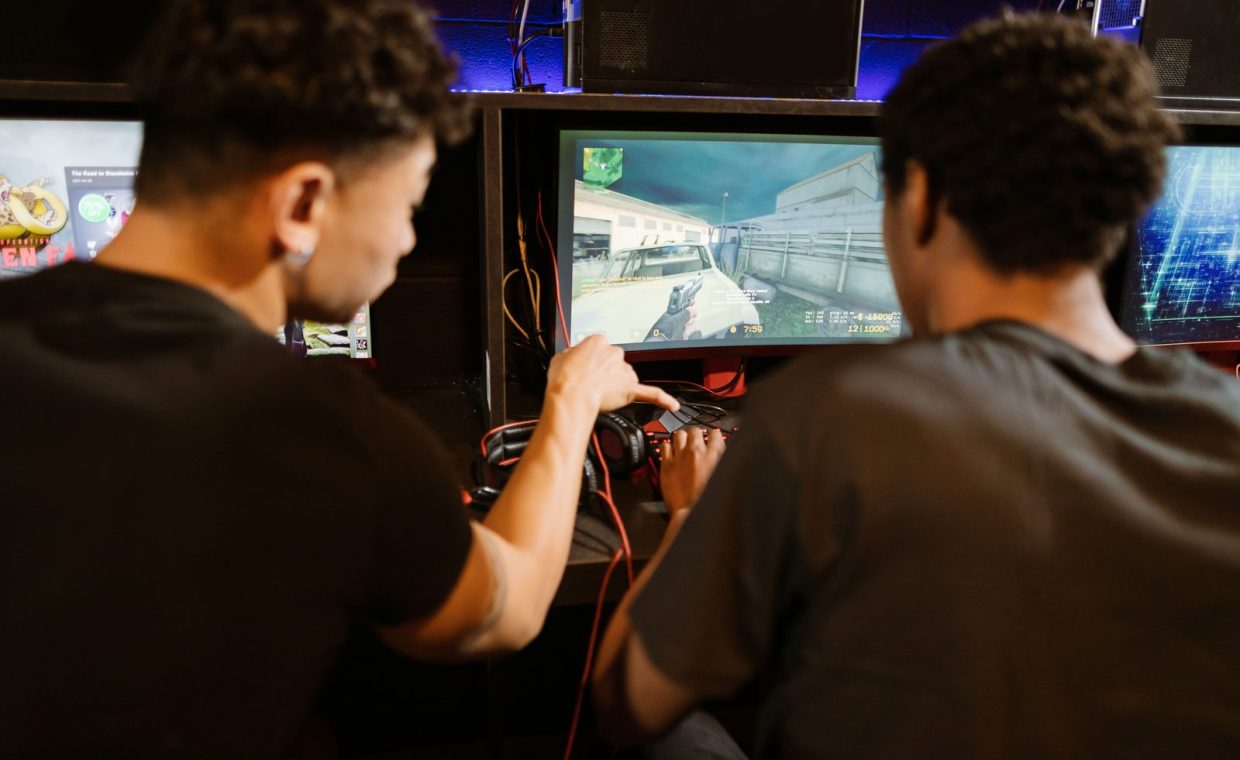
I once watched a Valorant friend grind through roughly 40 games in a single weekend, then complain on Monday that his rank had not budged an inch. He was confused, almost insulted by the game itself, because he had clearly put in the hours, so where exactly was the payoff?
Here is the uncomfortable part: he was not practicing at all, he was simply playing, and most people who feel stuck have never had that distinction explained to them.
I plateaued for the better part of a competitive year doing the exact same thing he was doing, and the fix was never more time. Instead, it was changing what I actually did with the hours I already had.
Name the one thing you are bad at
Improvement starts with a confession, because you cannot fix a problem you refuse to look at, and "I just need to play better" is not a problem you can act on.
Get specific to the point of discomfort. Are you dying first in fights because your crosshair drifts toward the floor? Do you panic and burn cooldowns the instant a team fight erupts? In a roguelike, do you keep losing runs to the same boss pattern you have never sat down to study?
Pick ONE weakness, not five, just one. The player who tries to fix everything at once fixes nothing, because attention is the resource you are genuinely short on.
If you cannot describe your weakness in a single concrete sentence that a friend could verify by watching you, then it is still too vague to practice, so keep narrowing it until it sharpens into something specific.
Separate practice mode from ranked mode
This is the rule almost nobody follows, and it is also the one that changed the most for me, because you simply cannot learn a brand new skill and try to win at the same time.
When you queue ranked, your brain defaults to whatever already works, since losing hurts and you instinctively want to avoid it. That instinct is the enemy of growth, and you will never practice an unfamiliar piece of footwork in a real match when a clean kill is on the line.
So build yourself a sandbox. In a shooter, that means the practice range, deathmatch, or aim trainers, while in a fighting game it means training mode with the dummy configured to punish your bad habits. In something like Elden Ring, it means deliberately re-fighting a boss you already beat, purely to absorb the rhythm without the panic of a first attempt.
Treat practice mode as the one place you are actually allowed to look stupid, because that permission is the entire point.
Drill the boring fundamental, then stop
Once you have isolated your one weakness and found a safe place to work on it, you drill: short, focused, repeated reps on the exact thing you named in step one.
Say your crosshair placement is genuinely bad. You do not "play more." Instead, you load deathmatch and your only goal for 20 minutes is keeping that crosshair at head level as you swing corners. Ignore your score entirely, because you are not there to win the deathmatch, you are there to build a single habit.
Keep the sessions short. Roughly 20 to 30 minutes of real focus beats two hours of half-attention every single time, since fatigue quietly turns practice back into mindless play, and you stop encoding anything new the moment you zone out.
Mindless repetition reinforces whatever you already do, mistakes included. Repetition only builds skill when you are concentrating on a specific target and adjusting between reps, otherwise a thousand sloppy reps just make you faster at being sloppy.
Review the tape, even when it stings
Professionals study their own demos and replays constantly, yet most ranked players never watch a single one, then wonder why the same avoidable death keeps repeating.
You do not need to review entire matches. Watch the moments where you died or lost a fight, and ask one question: what information did I have, and what did I do with it? Half the time you will discover that the death was decided five seconds before it happened, back when you wandered into a sightline you already knew was risky.
This is exactly the same logic behind common stealth game mistakes and how to fix them. The kill or the blaring alarm is rarely the real error; the real error is the decision you made just before it, and tape is the only reliable way to see it clearly.
When you review, ban the phrases "my team" and "that was lag" for the duration, because even if both are occasionally true, they teach you nothing you can act on. Hunt only for the thing that sat inside your control.
Set one goal per session that is not winning
Outcome goals like "win three games" are mostly out of your hands, whereas process goals are entirely within your hands, and those are what genuinely move your skill forward.
Before you queue, decide on a single process goal for the session. "I will re-position after every kill." "I will call out enemy locations even when I die." "I will not chase a low-health enemy into the open." Then grade yourself on whether you hit the goal, never on the scoreboard.
Some of my biggest improvement nights were actually losses. I dropped the games but nailed the habit I was working on, and two weeks later that same habit was quietly winning games on its own, without me thinking about it.
How to know a habit has stuck
You will eventually catch yourself doing the right thing automatically, in a moment where you were not consciously thinking about it at all, and that is the signal your rep work finally paid off. When it happens, return to step one and pick a fresh weakness, because that loop, found weakness to drilled fix to new weakness, is the entire engine of getting better.
Fix your setup so it stops fighting you
Skill is most of the battle, but you would be surprised how much friction comes from a setup that quietly sabotages you. If your frame rate dips during fights or your inputs feel mushy, you are effectively practicing on a moving target.
You do not need to spend a fortune. A stable frame rate matters more than a flashy one, and a basic mechanical keyboard with consistent actuation beats an expensive board you are not used to. A 1440p monitor at a high refresh rate is lovely, yet a locked, steady 1080p will serve your practice far better than a stuttery 1440p.
The same judgment applies to software tweaks, because some are genuinely worth it while others are pure placebo, which is why it helps to think honestly about which quality-of-life mods are actually worth it before you load up your game with twenty of them. Clean, consistent, and boring beats clever and unstable.
| Habit | Just playing | Actually practicing |
|---|---|---|
| Goal for the session | Win, climb rank | Hit one specific process goal |
| Mode | Ranked only | Sandbox first, then ranked |
| After a loss | Requeue immediately | Review the key moments |
| Focus | Everything at once | One weakness at a time |
| Session length | Until tired or tilted | Short and focused, then stop |
Protect your headspace
Tilt is not a personality flaw, it is a brain that has temporarily stopped learning. When you are frustrated, you make worse decisions and encode none of them, which makes an angry session genuinely worse than no session at all.
Build a hard rule for yourself: two bad losses in a row and you log off, or at least switch to something low-stakes for a while. A relaxing single-player run through a deep RPG such as The Witcher 3 or Skyrim can reset your head far better than forcing one more ranked queue while you are still seeing red.
Sleep counts too, more than most people care to admit. The brain consolidates motor skills overnight, so the rep you drilled last night is often noticeably sharper the next morning than it felt when you stopped. Grinding until 3am is the slowest route to improvement I know of.
Name one weakness, build a sandbox to fix it, drill it in short focused reps, review your tape honestly, set a process goal each session, and protect your headspace so the learning genuinely sticks.
How many hours a day should I practice to improve?
Quality beats quantity by a wide margin. One focused hour with a clear weakness and a process goal will outpace four hours of mindless queueing, so if you only have 30 minutes, spend it drilling one thing in a sandbox rather than rushing a ranked game.
Is watching pros or streamers actually useful for getting better?
It is, but only if you watch with a question in mind. Pick one skill you are working on and observe only how the pro handles that, for example their positioning after a kill, because passive watching while you scroll your phone teaches you almost nothing.
I am still hard stuck after all this. What am I missing?
Usually it is that you fixed your weakness in practice but never carried it into real games, or you quietly slipped back into fixing everything at once. Re-watch a few recent losses and you will almost always find one repeated mistake hiding in plain sight, so fix that single thing, then move on.
None of this is glamorous, and that is sort of the point. The players who climb are rarely the ones with the most raw talent; they are the ones willing to be a little bored, a little honest, and a little patient with one weakness at a time. Pick your one thing tonight, drill it for 20 minutes, and let the hours finally start paying you back.