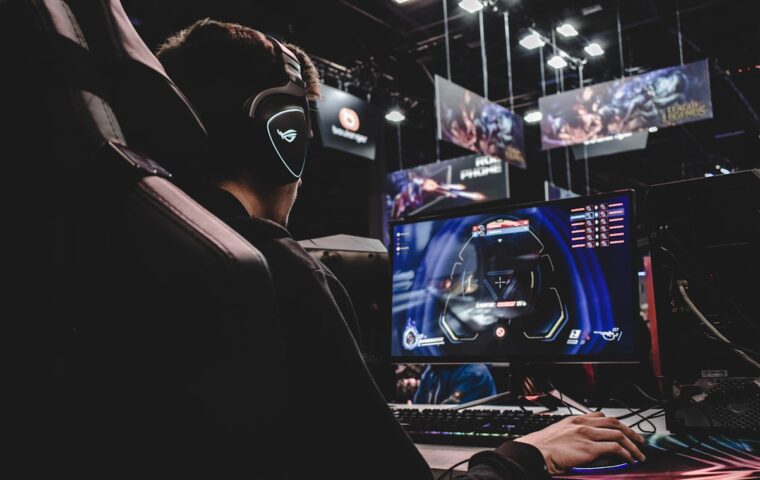


Marcus was hardstuck Diamond 2 and dropping, and the clip he sent me from one of his ranked games said everything: he whiffs an easy opening duel, instantly mutes his keyboard, and fires a one-word message to his duo that I will not repeat here. Three rounds later he is dead at spawn because he pushed alone, furious, trying to "win it back."
He told me he had lost something like 14 of his last 20 games, and not because his aim cracked overnight. The second a round went wrong, a different player took over his hands. A worse one. An angrier one.
Marcus is not a famous name. He grinds a regional Valorant scene, plays in small online cups, and once made it to a closed qualifier, so he is clearly good enough that mechanics were never the problem. When he asked me to help him stop throwing, I told him the truth: we were not going to fix his crosshair, we were going to fix the guy holding it.
What tilt actually was for him
People treat tilt like a mood, but it is closer to a habit loop. Something bad happens, your body floods, and you reach for the fastest way to discharge that feeling. For Marcus the discharge was always aggression: forced peeks, blaming the team, instant rematch attempts.
We spent a week simply labeling it. Every time he felt the heat rise, he wrote one line in a notes doc after the game, no analysis, just the trigger. Within days a pattern surfaced that he had never noticed.
It was almost never the loss itself. It was a specific moment, dying first in a round he "should" have won, and that single event accounted for roughly three quarters of his blowups. He was not tilted by losing. He was tilted by being embarrassed.
Most tilt-prone players think they hate losing, but watch closely and it is usually one narrow moment that sets you off: the bad beat, the flame in chat, the death you keep replaying in your head. Name that moment first.
The reset routine, step by step
Once we identified the trigger, the fix could be small. Big motivational overhauls never survive contact with a losing streak, whereas a tiny routine that fires automatically does.
Here is what Marcus built. It takes about ten seconds, and he runs it every single time he dies in a round that mattered to him.
- Breathe out, not in. One long exhale through the mouth. The body interprets a slow exhale as a safety signal, and it pulls his heart rate down faster than trying to "calm down" in his head.
- Hands off the keyboard. Literally lift them for two seconds, because that interrupts the forced-peek reflex before it can fire.
- One useful sentence. He says out loud what the team should do next round, not what just went wrong. "We have the eco read, save and stack B."
- Rejoin the round as a spectator. Watch a teammate's feed like a coach instead of stewing in the death screen.
That is the whole thing. No journaling mid-game, no meditation app, no breathing exercise that eats a full minute he does not have. It is small enough to actually execute under pressure.
Killing the throw spiral
The routine handled the spark, but the bigger damage came from what he did after the spark, and that required a separate rule.
Marcus had a habit of trying to solo-carry the instant he got mad: he would over-rotate, take impossible duels, and effectively hand the enemy free rounds. Sound familiar? A lot of the same patterns I broke down in this piece on the mistakes that keep solo queue players hardstuck traced back to exactly this, the urge to win the game alone the moment your emotions spike.
So we added one hard rule. After a tilt trigger, the next round he plays the safest, most boring role on the team: default setup, trade off a teammate, zero hero plays for one full round. The point is not the round itself. The point is proving to himself that he can still make a calm, deliberate decision while angry.
Right after a moment that usually tilts you, deliberately play one round as plain as possible. No flashy plays, just clean fundamentals. It interrupts the "win it back" spiral and gives your nervous system a chance to reset.
Why his duo mattered more than his aim
Here is the part Marcus resisted. A lot of his tilt was social. He played most of his ranked solo, surrounded by strangers, and strangers are easy to blame.
When he started queuing with the same two friends regularly, his blowups dropped almost overnight, and not because they were better players. He simply did not want to be the guy raging in front of people he respected. Accountability accomplished what willpower could not.
This tracks with everything I have seen about how a stable group reshapes your play. The same dynamics behind building real teamwork in a five-stack apply at the smallest scale too, because even a duo gives you a reason to keep your composure that a random lobby never will.
There is a wider truth underneath it, the same one that explains why games build such loyal communities in the first place. We behave better, and we last longer, when we feel like we belong to a group rather than grinding alone against the ladder.
The numbers, before and after
I want to be honest about what changed and what did not. His aim stats barely moved, and his headshot percentage was basically identical in month one and month three. The mechanics were never broken.
What shifted was everything downstream of his emotions.
| Metric | Before the routine | After about 8 weeks |
|---|---|---|
| Win rate over 20 games | around 30 percent | around 55 percent |
| Self-rated "throw" games | roughly 1 in 3 | roughly 1 in 10 |
| Forced solo peeks after a death | constant | rare |
| Rank | sliding through Diamond 2 | knocking on Ascendant |
Notice the win rate did not double because he got better at the game. It climbed because he stopped actively losing the games his old self was throwing away. There is a huge difference between climbing on raw skill and climbing by removing self-sabotage, and the second one is usually faster.
Marcus still tilts. He had a brutal three-game slide in week five and nearly quit the whole thing. The routine does not delete the feeling. It just shrinks how much damage one bad moment can do before you catch it.
How to start this yourself this week
You do not need his exact routine. You need a version small enough that you will actually run it when you are angry, because that is the only time it counts.
Start here.
- Spend three days simply naming your trigger after each session. One line. No fixing yet.
- Build a reset that takes under fifteen seconds and includes one physical action, like lifting your hands off the keyboard.
- Add a single "boring round" rule for the moment right after a trigger fires.
- Queue with at least one person you would feel embarrassed raging in front of.
Give it about three weeks before you judge it, because mental routines feel fake for the first week and automatic by the third. The dip in between is where most people quit, so plan for it.
Find the one narrow moment that actually tilts you, not just "losing." Build a ten-second reset with a physical step so it fires under pressure. Use a boring round to interrupt the throw spiral. Queue with people you respect so accountability does the heavy lifting. And measure your throw rate rather than your aim, because that is the stat that climbs fastest once your head is right.
How long before a tilt routine actually works?
For Marcus the real shift showed up around three weeks. The first week always feels forced and a little silly, so push through that part, because the routine only becomes automatic once you have run it through several genuinely frustrating sessions.
Should I just take a break when I tilt instead?
Breaks help, but they are a reaction rather than a fix, and the goal is to stay functional inside the game, not only to escape it. Use a short reset to keep playing well, and save the longer break for when a slide stretches across multiple sessions.
Does this work if I mostly play solo queue?
Yes, the reset and the boring-round rule are fully solo-friendly. The social accountability piece is the only part that needs other people, so even adding a single regular duo partner gives you most of that benefit without committing to a full team.
Marcus is not a different person now. He still misses easy shots and still feels the heat climb when he dies first. The difference is that the angry version of him no longer gets to hold the keyboard for the next five rounds. If you are throwing games you should be winning, start with that one narrow trigger this week and build outward from there. The climb is usually closer than the scoreboard makes it look.